
What is structural welding?
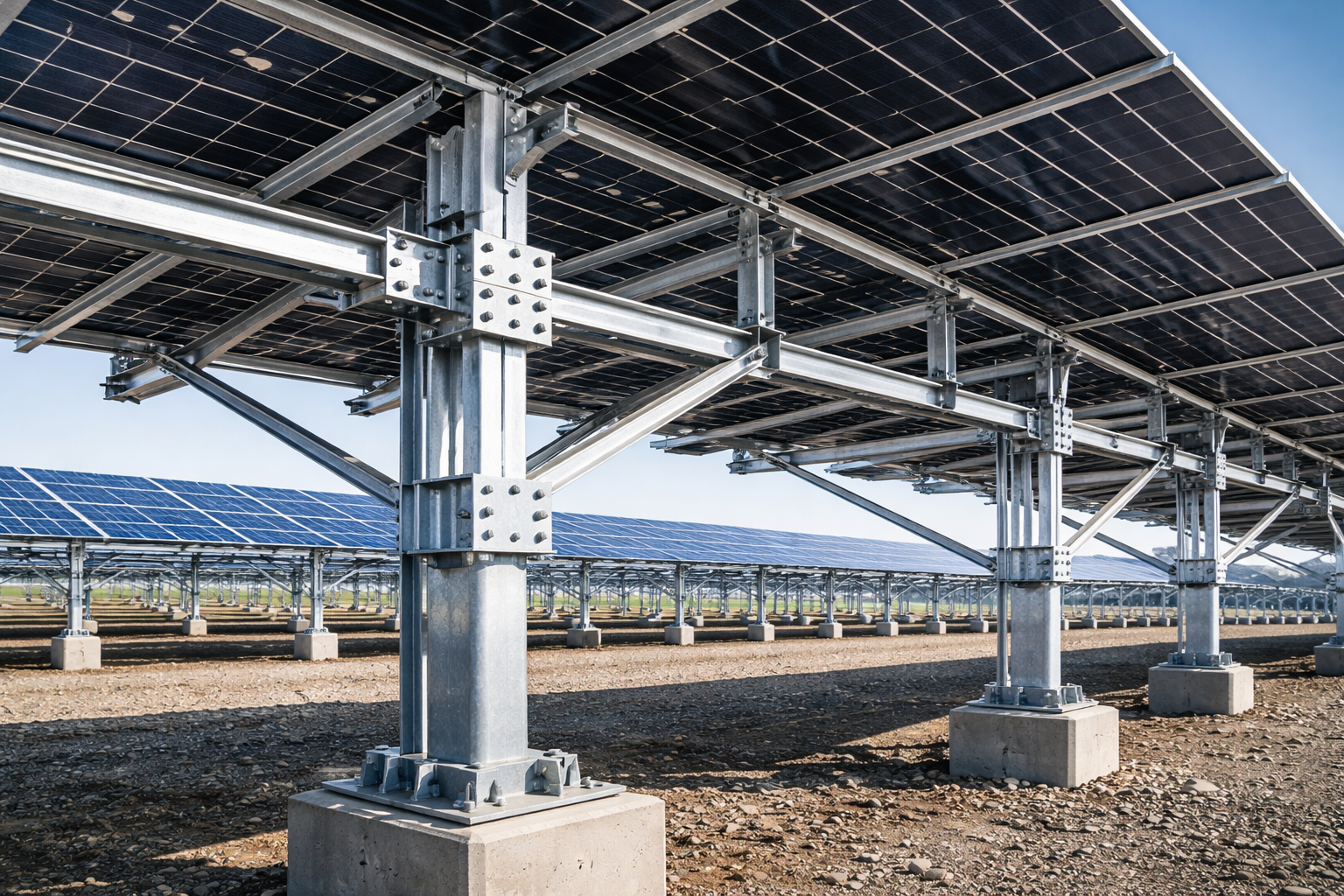
Structural welding is a permanent joining process between metal components designed to transfer static and dynamic loads safely and consistently. Unlike non-load-bearing or secondary welds, structural welds contribute directly to the stability of the structure and must therefore meet strict technical requirements.
In metal fabrication, every welded joint must be assessed according to the role it plays within the structure. Material thickness, connection geometry, steel grade, environmental conditions, expected stresses and the intended use of the structure all influence the choice of welding process and its execution.
Proper management of these factors makes it possible to produce safe, durable and compliant metal structures, designed to maintain their technical and functional performance over time.
Main welding processes used in metal fabrication
Metal fabrication requires different welding processes depending on the material, the complexity of the project and the working conditions in the workshop or on site. Choosing the most suitable technique is essential to achieve a reliable, accurate result that meets the project specifications.
- MIG/MAG welding: one of the most widely used processes for carbon steel fabrication. It offers high productivity, good weld quality and excellent versatility for the construction of steel structures, frames, load-bearing elements and metal components.
- TIG welding: used when high precision, controlled welding conditions and refined finishes are required. It is suitable for more delicate applications, special components and metalwork requiring a higher level of aesthetic quality.
- Shielded metal arc welding: still widely used on construction sites thanks to its operational flexibility. It is particularly useful for installation, repair, maintenance and welding activities carried out in variable environmental conditions.
Each welding process has specific characteristics and must be performed by qualified personnel, using controlled parameters and procedures consistent with the type of structure being manufactured.
Standards and certifications: the value of compliance
Structural metal fabrication operates within a strict regulatory framework designed to ensure safety, quality and traceability throughout the production process. Compliance is not only a formal requirement, but an essential condition for delivering reliable structures that meet market expectations.
One of the key references in the sector is EN 1090, the standard required for CE marking of structural steel and aluminium components where applicable. It is complemented by ISO 3834, which defines quality requirements for fusion welding of metallic materials.
In addition to company certifications, welder qualifications, qualified welding procedures, technical documentation and process traceability are also essential. These elements demonstrate that every production stage has been carried out according to verifiable and controlled criteria.
For a company specialised in metal fabrication, working in compliance with recognised standards means offering clients tangible value: safety, reliability, technical responsibility and greater competitiveness.
Quality control and weld inspections
The quality of structural welding does not depend only on the execution of the weld bead, but also on the control system applied before, during and after the process. In this context, non-destructive testing, commonly known as NDT, plays an essential role in detecting surface or internal defects without compromising the integrity of the component.
- Visual testing (VT): used to assess weld geometry, continuity and the absence of visible defects.
- Magnetic particle testing (MT): detects surface and near-surface discontinuities in ferromagnetic materials.
- Ultrasonic testing (UT): used to identify internal defects and verify the continuity of the welded joint.
- Industrial radiographic testing (RT): applied when a detailed analysis of the internal quality of the weld is required.
These inspections make it possible to identify potential issues before the structure is put into service, reducing technical risks and future maintenance costs. In advanced metal fabrication, quality control is not an additional step, but an integral part of the production process.
Technical experience and technological innovation
Modern metal fabrication is based on the integration of practical experience, technical expertise and advanced technology. The quality of a weld depends on the skill of the operators, the choice of filler materials, the correct setting of welding parameters and the use of suitable equipment.
Latest-generation welding machines, 3D design systems, qualified procedures and documented inspections now make it possible to manage complex projects with greater precision, repeatability and safety. This approach enables the production of custom metal structures for a wide range of sectors, including construction, industry, infrastructure, plant engineering, retail and public works.
Why structural welding is a strategic process
Treating structural welding as a simple production activity means underestimating its real value. Every welded joint contributes to the overall stability of the structure, its long-term resistance and the safety of the people who will use it.
Investing in skills, certifications, inspections and technology means delivering solid, safe and compliant metal structures. It also means providing the client with a reliable product, designed and manufactured to maintain its mechanical, functional and aesthetic performance over time.
In a sector where precision, responsibility and execution quality make the difference, structural welding is one of the clearest indicators of a metal fabrication company’s professionalism. It is the point where experience, technique and control come together to transform metal into a structure built to last.